
Japanese people really like it when visitors use even simple Japanese — a quick “hello,” or a “thanks”.
~3–4 min read
These small actions will make your interactions warmer right away. Here are five simple ways to sound more polite and make the locals love you (without memorising a textbook).
Table of Contents
1) ARIGATŌ → ARIGATŌ GOZAIMASU
Arigatō means “thanks.”
It’s more like a friendly “thanks” and not something more polite like “thank you”. That’s why Japanese speakers only use arigatō with close friends or family.
If you want to instantly dial it up to “polite,” add gozaimasu (I know, it’s a mouthful).
arigatō + gozaimasu = polite
Pronunciation tip: the last “u” is silent.
Think: GO – ZAI – MAS
Memory trick:
If you need help remembering gozaimasu, try: “cause I must.”
Why do I need gozaimasu? Cause I must!
2) -SAN
-san is kind of like “Mr.” / “Ms.” and can be used for any gender.
You put it after someone’s name:
○ Yamashita-san
If you want to make a good impression, use:
Last name + -san
So if you meet someone named Sota Yamashita, call them:
○ Yamashita-san
Some Japanese people love the chance to be casual with foreigners, so this kind of conversation is common:
You: “Konnichiwa, Yamashita-san.”
Yamashita: “Please call me Sota.”
You: “Nice to meet you, Sota-san.”
Yamashita: “No, you can just call me Sota — no need for -san.”
Starting with -san at the start shows you want to be polite and lets the Japanese person decide a level of formality/casualness that they are comfortable with.
3) OHAYO → OHAYO GOZAIMASU
Ohayō means “good morning”. (Literally it means “it’s early”.)
The three most common greetings are:
○ Morning: ohayō
○ Daytime: konnichiwa
○ Evening: konbanwa
But, ohayō is the odd one out: by itself, it isn’t polite.
Just like arigatou, it gets more polite with gozaimasu:
Ohayō gozaimasu!

4) BOWING
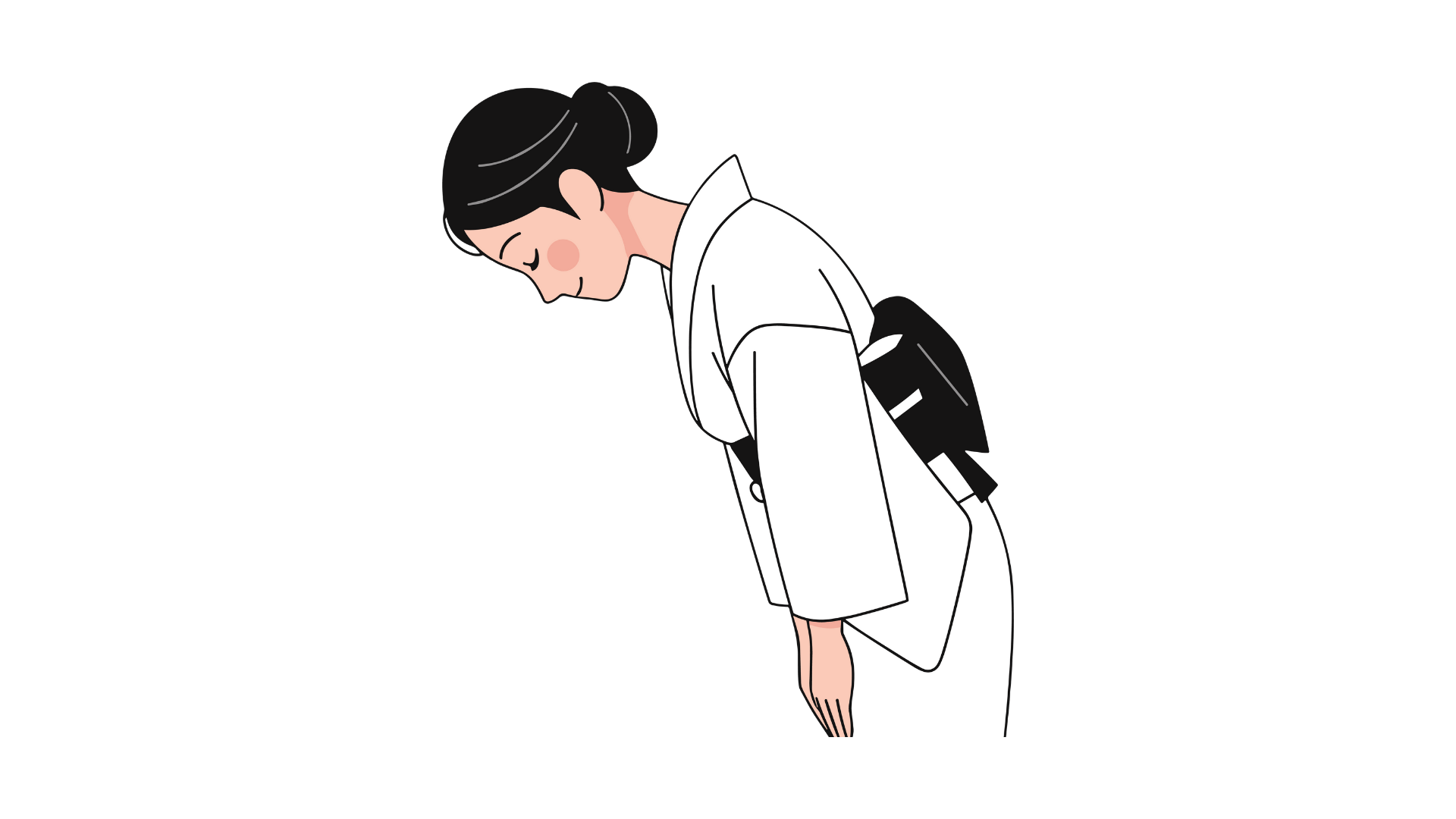
Okay, bowing isn’t a word, but it is communication. In Japanese it even makes the sound “peko-peko”.
A small nod or bow can make people immediately feel more comfortable with you.
Try this:
When you say greetings like konnichiwa or arigatō gozaimasu, add a small nod. It tends to be received really well.
Quick rule:
Small bow + polite phrase = extra friendly vibes
5) SUMIMASEN
Sumimasen means “sorry,” and you’ll hear it all the time.
When you say it, a small bow at the same time makes it feel more natural.
Here are a few super common uses:
○ Someone does you a favour: sumimasen
(“Sorry for making you go to the trouble” — even if you feel like saying “thank you.”)
○ You recieve a gift: sumimasen
(“Sorry, you really didn’t need to…” vibe)
○ You squeeze past someone on the train: sumimasen
(“Excuse me / sorry!”)
○ You bump into someone: sumimasen
(plain “sorry!”)
Intensity upgrade:
The bigger the inconvenience, the more you can repeat it:
○ sumimasen, sumimasen…
…and the longer/deeper you can bow.
Pocket Summary
If you remember nothing else, remember this:
○ arigatō gozaimasu = polite thanks
○ -san = respectful name add-on
○ ohayō gozaimasu = polite good morning
○ bow = instant friendliness
○ sumimasen = sorry / excuse me / “thanks-but-sorry”
Equipped with these five tips, you’ll be making Japanese friends in no time.
Leave a Reply